Why German Fluency Is Suddenly a Career Superpower.
07 September, 2026· Article by Maria Jones


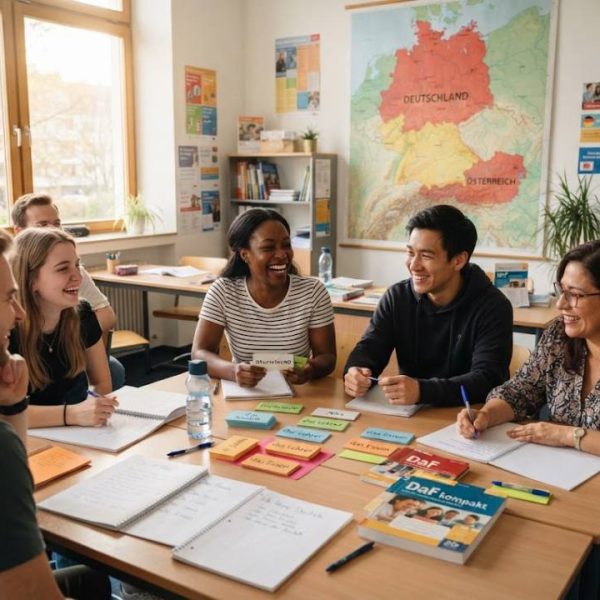
Walk into any evening language class in London, Toronto, or Sydney right now and you will likely find more people bent over German textbooks than French or Spanish ones. That shift did not happen by accident. Recruiters, exchange students, and remote workers are all discovering the same thing at once: German opens doors that other second languages simply do not.
The Bilingual Brain Advantage
Cognitive scientists have spent decades studying what happens when adults pick up a second language, and the findings keep pointing the same direction. Bilingual speakers tend to show sharper attention control, better task-switching, and in several long-term studies, a delayed onset of age-related memory decline. Learning German specifically forces the brain to track grammatical gender, case endings, and flexible word order all at once, which is exactly the kind of mental workout that produces those benefits fastest.
None of this requires natural talent. Adults who study consistently for even twenty minutes a day report noticeable fluency gains within six months, according to teachers who run these evening courses. The habit matters more than raw aptitude.
Why German Specifically Is Surging
Germany remains Europe's largest economy, and its manufacturing, engineering, and life sciences sectors are chronically short of skilled workers who also speak the language. Austria and Switzerland add two more high-income labor markets where German unlocks jobs that are otherwise closed to non-speakers. Universities in all three countries also offer tuition-free or low-cost degrees to international students, provided they can demonstrate language proficiency.
The practical payoff shows up fast in salary negotiations and visa applications, not just in casual conversation. Employers increasingly list a B2 German certificate as a genuine hiring filter rather than a nice-to-have line on a resume.
Where Apps Stop and Real Documents Begin
Duolingo streaks and podcast subscriptions build real conversational confidence, and nobody should skip that stage. But there is a hard line where casual learning stops being enough: the moment official paperwork enters the picture. A university admissions office, a German consulate, or an employer's HR department will not accept a translation you did yourself, no matter how fluent you have become.
Diplomas, birth certificates, marriage records, and employment contracts all need a translation that a government office or institution will actually stamp and file. That is where certified German translation services come in, turning a personal document into something an official body will legally recognize, with the translator's certification attached.
The Business Case For Certified Accuracy
Companies expanding into the DACH region run into the same wall on a larger scale. Contracts, safety manuals, and compliance filings all carry legal weight, and a mistranslated clause can cost far more than the price of hiring a qualified linguist in the first place. A single ambiguous term in a supply contract has derailed deals worth millions, which is why serious businesses budget for professional translation rather than treating it as an afterthought.
If German fluency has become a career asset, its neighbours are worth a second look too. The polish language sits alongside it in a great many supply chains, and managers who understand how its speakers frame agreement and disagreement avoid a surprising amount of friction. Communication habits travel less predictably than vocabulary does.
This is also where the language-learning trend and the business trend meet. Employees who understand German conversationally still rely on certified translators for anything with legal or regulatory consequences, because fluency and certification solve two different problems.
Companies entering English-speaking markets face the same challenge in reverse, needing every contract and product document rendered with native-level precision. Dedicated business translation services help firms navigate the gap between conversational fluency and the exact wording that contracts, compliance filings, and negotiations demand. Investing in professional business language support early prevents the costly misunderstandings that derail cross-border deals.
The Hidden Cost of Skipping Certification
People occasionally try to save money by submitting a machine-translated document or asking a bilingual friend to write up an official-looking version. Almost every time, the receiving institution rejects it outright, and the applicant loses weeks waiting for a corrected version while a visa deadline or university intake date quietly passes. The cheapest translation option is rarely the cheapest option once delays are factored in.
Certified translators also carry professional liability for their work, something a friend doing a favor cannot offer. If a court, immigration office, or accreditation body later questions a document, a certified translation comes with a paper trail: a signed statement of accuracy, the translator's credentials, and often a stamp or seal that ties the document to a real, accountable professional. For anything with legal consequences, that accountability is the entire point.
Building Fluency That Lasts
For anyone serious about long-term progress, structure beats intensity. Short, daily study sessions paired with real listening practice outperform occasional cramming, and resources from established cultural institutes make that easier to sustain. The Goethe-Institut runs graded courses and exams recognized worldwide, while Deutsche Welle's free German courses pair grammar lessons with genuine news audio, so learners hear the language exactly as it is spoken today.
Bilingual learning is rarely a straight line. Plateaus happen, motivation dips, and grammar cases still trip up even advanced speakers years in. What separates people who reach real fluency from those who stall out is simply staying consistent through the boring stretches, and knowing when a task calls for a certified professional rather than a personal best effort.
Recent Posts

Why More People Are Learning T...

Perché Sempre Più Italiani S...
Por Que Mas Hispanos Estudian ...

Why Learning A Second Language...

Best CAT Translation Tool for ...
Pourquoi apprendre une langue ...
Share it.
Links
We use cookies
We use cookies to give you the best online experience, remember your preferences, and understand how the site is used. You can accept all cookies, reject optional ones, or choose which categories to allow.
Privacy PolicyCookie preferences
Choose which cookies we can use. Necessary cookies stay on because the site cannot work without them.
For more details, read our Privacy Policy.