Best CAT Translation Tool for Modern Localization Teams.
15 September, 2026· Article by Maria Jones

Translation teams juggle deadlines, terminology, and client expectations every day, and the software behind that work often decides whether a project stays on budget or spirals into rework. A computer-assisted translation, or CAT, tool is the engine that keeps linguists consistent from the first sentence of a project to the last, and picking the right one has become one of the most consequential decisions a language services provider makes.
What A Cat Tool Actually Does
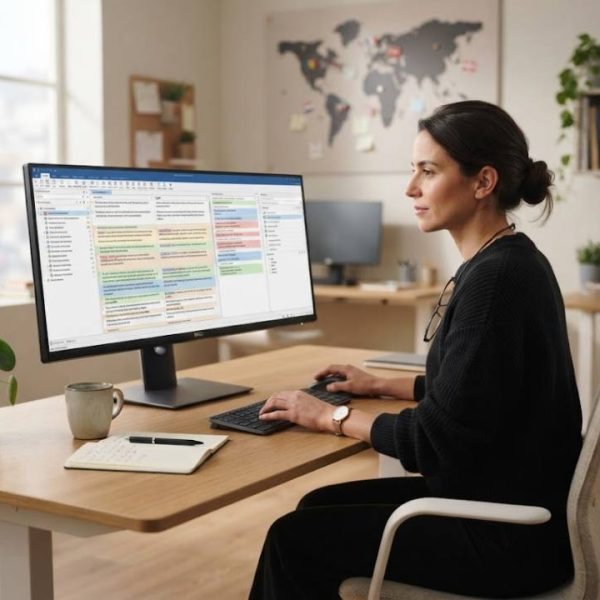
A cat tool splits source text into manageable segments, stores every translated segment in a memory database, and suggests matches whenever similar phrasing reappears later in the same project or a future one. The real value is not translation speed alone, it is consistency across thousands of segments that a single human reviewer could never track by memory. Terminology databases, quality checks, and real-time collaboration sit alongside the translation memory, turning a plain text editor into a full production system that scales with a growing content library.
Why Teams Ask What Is A Cat Tool Before They Buy
Buyers researching what is a cat tool usually start from a painful experience: inconsistent terminology across a product catalog, a missed deadline because two translators worked from different glossaries, or a client complaint about tone drifting between chapters of the same document. Understanding the category before shopping saves months of trial and error. A cat tool is not machine translation on its own. It is the workspace that makes human translation faster and machine suggestions genuinely usable, rather than a black box that spits out text nobody can verify.
Smaller teams sometimes assume this software is built only for large agencies. In practice, a single freelance translator working across several regular clients benefits just as much from segment memory and glossary enforcement as a fifty-person localization department, since both are trying to protect the same thing: consistent output under time pressure.
Signals Of The Best Cat Tool For Your Workflow
Not every project needs the same feature set. Teams handling regulated content need audit trails and locked terminology that cannot be overridden without approval. Marketing teams need fast turnaround and tone flexibility that a rigid terminology lock would actually hurt. The best cat tool for a five-person agency rarely matches the right platform for an enterprise localization department, so evaluation has to start with actual project volume and file types rather than a feature checklist copied from a review site.
Cloud-based platforms now dominate new purchases because they remove the version-control headaches that plagued desktop-only software for years. File compatibility deserves equal attention too: a tool that handles software strings elegantly may struggle with complex desktop publishing files, so testing with real project files matters more than trusting a vendor's supported-format list.
Where A Cat Translation Tool Fits In A Bigger Stack
For companies expanding into new markets, investing in professional brand localization that goes beyond literal translation can prevent costly cultural missteps. Adapting tone, imagery, and messaging to local expectations builds trust faster than a one-size-fits-all campaign. Teams that review common localization mistakes before launch tend to avoid the rework and reputational damage of getting it wrong.
A cat translation tool rarely works alone. It connects to content repositories, project management dashboards, and increasingly to AI engines that pre-translate segments before a linguist reviews and polishes them. Integration quality, not raw feature count, is what separates tools that teams actually keep using from the ones abandoned after the trial period. Wordbeam approaches this by pairing translation memory and terminology management in one place, rather than forcing a choice between speed and accuracy.
Localization teams judge a CAT tool by how well it handles review, not by how fast it produces a first draft. Review is where errors are caught and where a second linguist signs off on the work. That same two-stage discipline is what separates credible certified translation services from a cheap one-pass rendering.
Software alone rarely covers highly specialized content. Teams localizing engineering manuals, medical device instructions or compliance documentation often pair their CAT platform with dedicated technical translation services staffed by subject-matter linguists. The tool keeps terminology consistent while the specialists make sure complex concepts survive translation intact. That combination is what lets regulated industries ship multilingual documentation with confidence.
Evaluating Vendors Without Getting Lost In Marketing
Every vendor claims speed and accuracy gains. A more useful test is a pilot project using real files from a current workflow, measured against three questions: does the memory leverage actually reduce billable hours, does the terminology check catch errors a human reviewer would miss, and does the interface slow down experienced translators instead of helping them. Framing a trial around these questions tends to expose the difference between marketing claims and daily usability far faster than a sales demo ever will.
Pricing structures also vary more than buyers expect. Per-seat licensing suits small, stable teams, while usage-based pricing can better match agencies whose volume swings seasonally. Reading the fine print on what counts as a "word" for billing purposes, matched, fuzzy, or new, prevents an unpleasant surprise on the first invoice.
Making The Final Call
Budget matters, but the tool teams choose today has to scale with content volume for the next several years, not just the current project. A platform that feels adequate at ten thousand words a month can buckle at a hundred thousand once more languages and more reviewers join the pipeline. Teams that treat the selection process as infrastructure planning, rather than a one-time software purchase, tend to avoid the costly migration projects that come from outgrowing a tool within eighteen months.
The right CAT tool becomes invisible once it fits a team's workflow, quietly catching inconsistencies and saving hours that used to go into manual terminology checks. That invisibility, more than any single feature on a comparison chart, is the real marker of a good choice.
Recent Posts

Why More People Are Learning T...

Perché Sempre Più Italiani S...

Por Que Mas Hispanos Estudian ...

Why Learning A Second Language...

Pourquoi apprendre une langue ...

Comment les entreprises franç...
Share it.
Links
We use cookies
We use cookies to give you the best online experience, remember your preferences, and understand how the site is used. You can accept all cookies, reject optional ones, or choose which categories to allow.
Privacy PolicyCookie preferences
Choose which cookies we can use. Necessary cookies stay on because the site cannot work without them.
For more details, read our Privacy Policy.